In this article
In DeFi trading, milliseconds matter. The difference between a profitable trade and a missed opportunity often comes down to architectural decisions that most traders never think about: where your trading bot actually runs.
The majority of automated trading solutions today follow a cloud-first architecture-your bot runs on someone else's server, communicating with your wallet through layers of API calls and network hops. It's convenient, sure. But convenience comes with hidden costs that directly impact your trading performance, security posture, and ultimately, your bottom line.
This article explores why a local-first architecture-running your trading bot directly on your own machine-provides fundamental advantages that no amount of cloud optimization can overcome. We'll examine the technical realities of latency, security, reliability, cost, and privacy, backed by real-world data from the 2025 DeFi landscape.
Whether you're running high-frequency strategies on Solana or simply want your trading automation to execute faster, safer, and cheaper, understanding these architectural trade-offs is crucial.
🎯 What You'll Learn
- Why 50-200ms of cloud latency costs real money in fast-moving DeFi markets
- How $3.3 billion in crypto hacks in 2025 highlight the risks of cloud-based key management
- Why recent AWS and Cloudflare outages exposed the single point of failure in cloud bot architectures
- The true cost comparison between subscription models and performance-based fee structures
- How cloud platforms see your entire strategy-and why that creates front-running risks
1. Latency: Milliseconds Matter in DeFi ⚡
The Speed of Execution
In traditional finance, high-frequency trading firms spend millions on fiber-optic cables to shave microseconds off their execution times. In DeFi, the same principle applies-but the timescales are different, and the solutions more accessible.
Local-first execution typically achieves sub-20ms response times from decision to transaction submission. Your bot detects an opportunity, evaluates it against your criteria, prepares the transaction, and submits it to the Solana network-all within 20 milliseconds.
Cloud-based bots introduce multiple network hops that add 50-200ms of latency:
- Market data must travel from the blockchain to the cloud server
- The bot processes the data and makes a decision
- The decision travels back to your local machine or directly to the blockchain
- API rate limits may introduce additional queuing delays
This might not sound like much. After all, what's 100 milliseconds?
The Real Cost of Latency
Let's quantify it. In a recent analysis of 120 entry trades executed by a local-first bot, earlier execution resulted in an average gain of $1.42 per trade. That's $170 in additional profit from speed alone-roughly a 0.3-0.5% edge per trade.
In DeFi markets, where token prices can swing 5-10% in seconds, that execution edge compounds:
- First-mover advantage: Local bots detect opportunities and execute before cloud-based competitors receive the same data
- Slippage reduction: Faster execution means less price movement between decision and execution
- MEV mitigation: Quicker submission reduces the window for front-running attacks
Solana's Unique Timing Challenges
Solana's 400ms block times make latency even more critical. A transaction submitted early in a slot has a significantly higher probability of inclusion than one submitted late. Cloud latency can push your transaction into the next slot-or worse, into competition with hundreds of other transactions that saw the same opportunity.
When you factor in slot lag (the delay between when a slot is finalized and when your RPC provider reports it), local execution becomes even more advantageous. Local bots can maintain direct connections to multiple RPC providers simultaneously, selecting the fastest response for each operation. Cloud bots must proxy everything through their infrastructure.
The Compounding Effect
That $170 advantage over 120 trades might seem modest. But consider:
- Most active traders execute hundreds of trades per month
- Compounding gains on re-invested profits amplifies the edge
- Over a year, the latency advantage can represent 5-10% additional returns
In competitive DeFi markets, a consistent 0.5% execution edge isn't just nice to have-it's the difference between profitability and losses after accounting for fees and slippage.
2. Security: Your Keys, Your Control 🔒
The 2025 Security Landscape
The crypto security landscape in 2025 has been brutal. According to blockchain security firms, over $3.3 billion was stolen from crypto platforms in 2025 alone. The single largest breach-Bybit's $1.4 billion hack in February-served as a stark reminder that centralized custody of private keys creates honeypots for sophisticated attackers.
Cloud-based trading bots inherit this fundamental security challenge. To execute trades on your behalf, they need access to your private keys or signing authority. This creates several attack vectors:
Cloud Key Management Risks
Server-side key storage: Even with encryption, storing private keys on cloud servers means those keys traverse networks, reside in memory on shared infrastructure, and potentially touch multiple systems you don't control.
API key compromise: Cloud bots typically require API keys with trading permissions. If the cloud provider is breached, attackers gain access to all users' trading capabilities simultaneously. This creates a high-value target that justifies sophisticated attacks.
Insider threats: Cloud platforms employ developers, support staff, and administrators with varying levels of system access. Each person represents a potential security weakness.
Regulatory seizure: Cloud-hosted assets can be frozen or seized by government authorities, even if you've done nothing wrong. Your trading operations can be shut down without warning.
Local-First Security Model
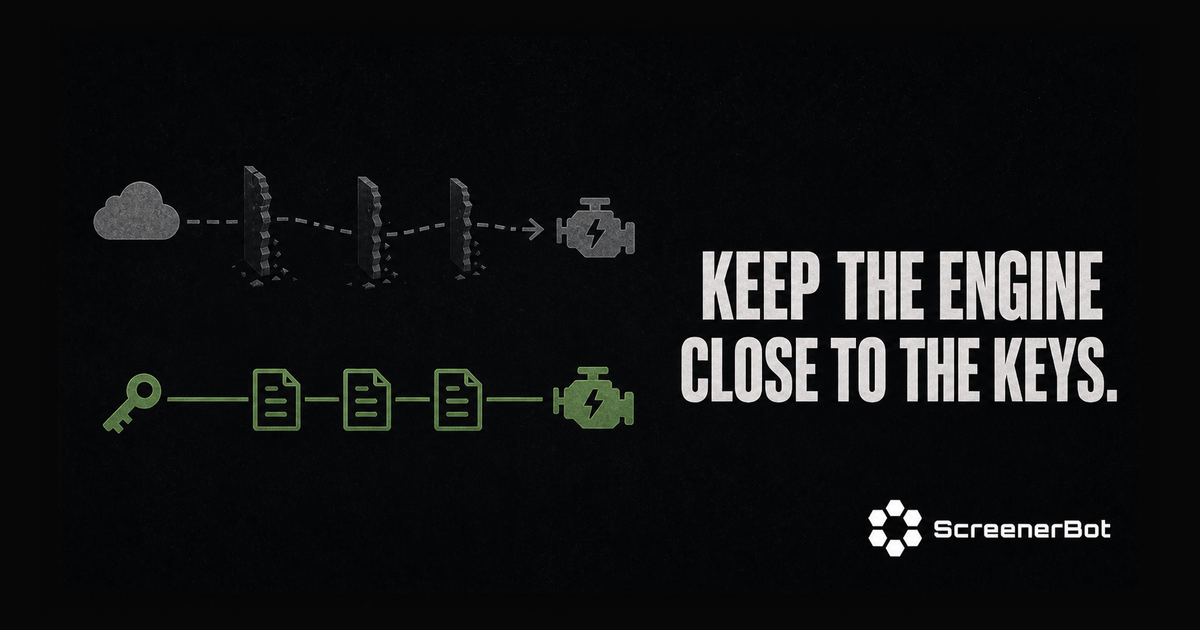
Local private key storage fundamentally changes the security model. Your keys never leave your machine. They reside in your operating system's secure storage (macOS Keychain, Windows Credential Manager, Linux keyrings), protected by your device's full-disk encryption and your user authentication.
For an attacker to compromise your keys, they must:
- Gain physical or remote access to your specific machine
- Bypass your operating system's authentication
- Extract keys from encrypted storage
- Do all this without triggering security alerts
This is orders of magnitude harder than compromising a cloud server that holds keys for thousands of users.
The Post-FTX Shift
The FTX collapse in late 2022 accelerated a philosophical shift in the crypto community: "Not your keys, not your coins." Traders who previously tolerated custodial solutions now demand self-custody.
Local-first trading bots align with this principle. Your wallet remains under your exclusive control. The bot operates as a tool you run locally, not as a service that holds your assets. If you need to stop trading or switch solutions, you simply close the application. No withdrawal process, no waiting periods, no permission required.
Defense in Depth
Local execution also enables multiple security layers:
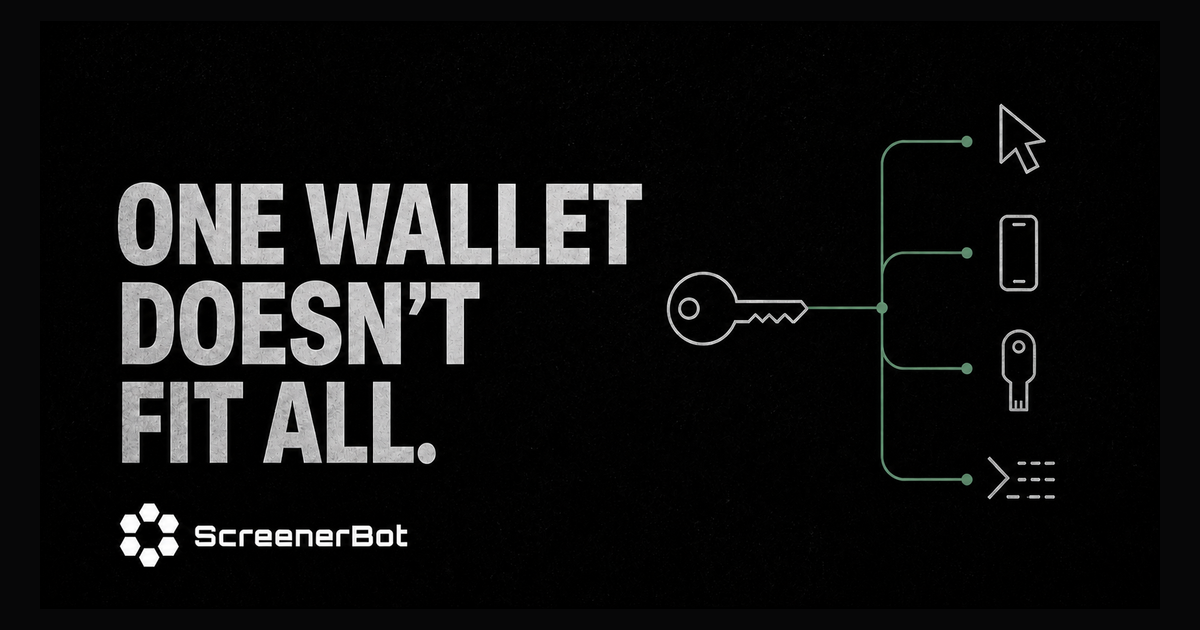
- Hardware wallet integration: Connect your hardware wallet directly to your local bot for transaction signing
- Multi-signature workflows: Implement multi-sig schemes that require approval from multiple devices
- Network isolation: Run your bot on a dedicated machine with restricted network access
- Audit trails: Maintain complete local logs of all transactions without exposing them to third parties
These security architectures are difficult or impossible to implement with cloud-based solutions.
3. Reliability: No Cloud Outage Dependencies 🛡️
The Cloud Reliability Myth
Cloud providers market "five nines" (99.999%) uptime, but the reality is more complex. In Q4 2025 alone, major cloud infrastructure experienced several significant outages:
- AWS us-east-1 outage (October): Affected thousands of services for 3+ hours
- Cloudflare global disruption (November): Impacted CDN and security services worldwide
- Google Cloud zone failure (December): Took down multiple regions for 90 minutes
When your trading bot runs in the cloud, you inherit these failure modes. A regional outage or network partition can disable your trading operations completely, often at the worst possible time-during high volatility when you need automation most.
Exchange API Rate Limits
Cloud-based bots also face API rate limiting challenges that local-first architectures can avoid:
Shared rate limit pools: When multiple users share the same cloud infrastructure, they often share API rate limits. One user's aggressive polling can trigger rate limits that affect everyone.
Stricter limits for cloud IPs: Major exchanges like Coinbase impose 40 requests per second limits on API endpoints. Cloud data centers with thousands of requests originating from the same IP blocks often face additional restrictions or temporary bans.
WebSocket connection limits: Exchanges limit concurrent WebSocket connections per IP. Cloud services must multiplex a single connection across multiple users, introducing latency and reducing data freshness.
Local Execution Independence
Local-first bots eliminate cloud dependencies for core trading operations. Your bot connects directly to:
- Solana RPC nodes (via Helius, QuickNode, or your own validator)
- DEX smart contracts on-chain
- Price feed APIs with your own rate limit allocation
If AWS goes down, your bot keeps running. If Cloudflare has issues, your trading continues. You've removed the middleman.
Multi-RPC Failover
Local execution also enables sophisticated failover strategies that cloud services struggle to implement:
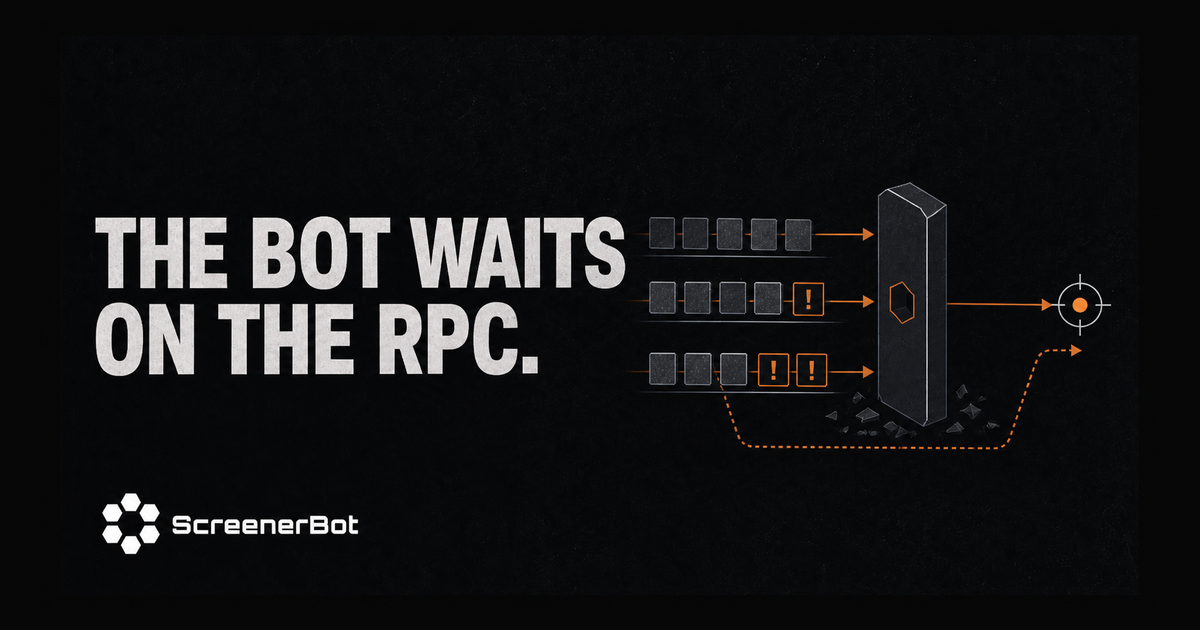
Circuit breaker patterns: Automatically detect unhealthy RPC endpoints and switch to alternatives within milliseconds Latency-based routing: Send each request to the fastest responding provider in real-time Parallel queries: Query multiple RPC providers simultaneously and use the first response Custom endpoint priorities: Configure your own endpoint preferences based on historical reliability
These patterns require direct network access and low-latency switching that cloud proxies can't match.
The Cost of Downtime
In volatile DeFi markets, downtime costs real money:
- Missed entry opportunities: Tokens pump 20-50% in minutes; cloud outages mean you miss the move
- Failed exit protection: Positions can't be closed when cloud infrastructure fails
- Stuck transactions: Partial transaction submission leaves you in undefined states
Local reliability means your trading operations continue regardless of external infrastructure health.
4. Cost: Pay for Performance, Not Subscriptions 💰
The Subscription Model Tax
Cloud-based trading bots overwhelmingly follow a subscription pricing model:
- Basic tiers: $19-$49/month for limited features and trade volume
- Professional tiers: $99-$199/month for advanced strategies and higher limits
- Enterprise tiers: $299-$750/month for institutional features
Let's calculate the annual cost:
- Budget trader ($49/month): $588/year
- Active trader ($149/month): $1,788/year
- Professional ($299/month): $3,588/year
These subscriptions persist regardless of your trading activity or profitability. Whether you execute 10 trades or 10,000, whether you make money or lose it, the subscription fee is due.
Hidden Cloud Costs
Subscription fees are just the beginning:
Premium API access: Many cloud bots require separate subscriptions to data providers (DexScreener Pro, CoinGecko API, etc.) adding $50-$200/month
VPS fees: Some cloud bots require you to run your own Virtual Private Server for "better performance," costing $20-$100/month
Volume-based surcharges: Higher trading volumes often trigger additional fees or require tier upgrades
Feature paywalls: Advanced strategies, additional DEX support, or priority execution frequently locked behind higher tiers
The Local-First Economic Model
Performance-based fees align incentives differently. ScreenerBot, for example, charges a 0.5% fee only on successful swaps. No trading? No fees. Losing month? You're not paying subscriptions on top of losses.
Let's compare scenarios:
Scenario 1: Active trader, $50,000 monthly volume
- Cloud bot subscription: $149/month = $1,788/year
- Local-first (0.5% fee): $250/month = $3,000/year
- Cost difference: Local costs $1,212 more BUT handles unlimited volume with no tier limits
Scenario 2: Moderate trader, $10,000 monthly volume
- Cloud bot subscription: $49/month = $588/year
- Local-first (0.5% fee): $50/month = $600/year
- Cost difference: Nearly identical
Scenario 3: Conservative trader, $2,000 monthly volume
- Cloud bot subscription: $49/month = $588/year
- Local-first (0.5% fee): $10/month = $120/year
- Cost difference: Local saves $468/year
The Break-Even Analysis
Performance-based fees favor consistency over volume tiers:
- No artificial volume limits: Trade as much as your strategy supports
- Aligned incentives: Fee only applies to successful trades (failed transactions cost nothing)
- Predictable costs: 0.5% of volume is calculable; subscription tiers + overages are not
- Zero fixed costs: Pause trading for a month? Zero fees.
For many traders, especially those testing strategies or trading selectively, local-first economics are dramatically cheaper.
Cost of Switching
Subscription models also create lock-in costs:
- Sunk cost fallacy: "I'm paying for it, might as well use it" leads to overtrading
- Configuration lock-in: Strategies configured in one platform don't transfer
- Data migration: Historical performance data trapped in the platform
- Relearning costs: Switching platforms means learning new UIs and APIs
Local-first solutions with portable configuration and open data formats reduce switching costs to near-zero.
5. Privacy: Keep Your Strategy Confidential 👀
What Cloud Platforms See
When your trading bot runs in the cloud, the platform has complete visibility into your operations:
Every trade: Entry and exit points, position sizes, tokens traded, slippage tolerance, gas fees paid
Your entire strategy: Which tokens you screen for, what criteria you apply, how you manage risk, when you take profits
Wallet addresses: Your complete on-chain identity, all historical transactions, current holdings, profit/loss
Behavioral patterns: When you trade most actively, how you react to volatility, your risk tolerance, your typical hold times
This data is incredibly valuable. It represents years of strategy development, backtesting, and real-money experience.
The De-Anonymization Problem
Even if cloud platforms promise anonymity, blockchain data is permanent and public. Sophisticated analysis can link patterns:
Pattern correlation: If a cloud platform serves 10,000 users and executes trades in batches, on-chain analysts can identify which wallets belong to that platform's users
Timing analysis: Coordinated trade timing reveals relationships between wallets. If multiple wallets using the same platform execute similar trades within seconds, they're linkable
Strategy fingerprinting: Your specific combination of tokens, entry criteria, and exit rules creates a unique fingerprint. Once identified, your entire trading history becomes attributable
Front-Running Risks
Concentrated strategy knowledge creates front-running opportunities:
Internal front-running: Platform operators or employees could theoretically trade ahead of profitable user strategies
Data breach front-running: If strategy data is compromised, attackers know exactly which tokens you're about to buy
MEV exploitation: Sophisticated MEV bots monitoring cloud platform transaction patterns can front-run orders they predict will be profitable
While reputable platforms have safeguards, the structural risk remains: centralized knowledge of thousands of traders' strategies creates asymmetric information that can be exploited.
Local Privacy Advantages
Local-first execution keeps your strategy confidential:
Zero data transmission: Your screening criteria, risk parameters, and decision logic never leave your machine
Direct RPC connections: Transactions go straight to Solana validators; no intermediary sees your intent before execution
Wallet isolation: Only you know which wallets you control and how they're related
Strategy independence: Your trading patterns aren't correlated with thousands of other users of the same platform
Privacy as Competitive Advantage
In DeFi, information is alpha. The moment your strategy becomes public knowledge, its effectiveness diminishes:
- Others copy your approach, increasing competition
- Market makers adjust pricing when they detect your patterns
- MEV bots specifically target your transaction patterns
Keeping your strategy private preserves its edge. Local execution is the only architecture that guarantees this privacy.
Regulatory Privacy
Beyond competitive concerns, privacy also has regulatory implications:
Transaction surveillance: Cloud platforms can be compelled to provide transaction data to authorities
Pattern analysis: Governments increasingly demand access to trading pattern data for tax and compliance purposes
Jurisdictional risk: Cloud platforms operate under specific jurisdictions with varying privacy laws
Local-first trading doesn't eliminate regulatory obligations (you're still responsible for tax reporting), but it does minimize the collection and storage of comprehensive trading data by third parties.
🎓 Key Takeaways
Latency advantages are measurable: Local-first execution achieves sub-20ms response times compared to 50-200ms for cloud solutions, translating to 0.3-0.5% better execution prices-about $1.42 per trade in real-world testing.
Security starts with custody: With over $3.3 billion stolen from crypto platforms in 2025, local key storage eliminates the centralized honeypot problem inherent in cloud-based key management.
Reliability through independence: Cloud outages (AWS, Cloudflare) and exchange API rate limits don't affect local-first bots that maintain direct RPC connections with automatic failover.
Cost models align with trading reality: Performance-based fees (0.5% on trades) vs. fixed subscriptions ($588-$3,588/year) mean you only pay when you're actively trading, with no volume tiers or feature paywalls.
Privacy preserves your edge: Local execution keeps your entire strategy-screening criteria, risk parameters, and trading patterns-completely confidential, preventing front-running and strategy degradation from exposure.
Conclusion
The cloud isn't going anywhere, and for many applications, it's the right choice. But automated DeFi trading is different. The combination of latency sensitivity, security requirements, cost considerations, and strategy confidentiality creates a unique set of constraints where local-first architecture provides fundamental, not marginal, advantages.
Speed matters because milliseconds translate directly to better execution prices. Security matters because $3.3 billion in losses demonstrates that centralized key custody remains the industry's greatest vulnerability. Reliability matters because market opportunities don't wait for cloud infrastructure to recover. Cost efficiency matters because fixed subscriptions penalize selective trading and inactive periods. Privacy matters because your strategy is your competitive advantage.
ScreenerBot was built from the ground up with a local-first architecture because these advantages can't be retrofitted onto cloud platforms. Your wallet stays on your machine. Your strategies remain confidential. Your bot responds in milliseconds, not hundreds of milliseconds. And you only pay when you trade successfully.
Ready to experience the advantages of local-first trading automation? Try ScreenerBot and see the difference that architecture makes.
Disclaimer: Trading cryptocurrencies carries risk. Past performance does not guarantee future results. Always conduct your own research and trade responsibly.