In this article
"In trading, milliseconds separate profit from loss. Your RPC provider is the invisible factor that determines which side you're on."
When you execute a trade on Solana, you're not directly talking to the blockchain. You're going through a Remote Procedure Call (RPC) provider-a gateway that relays your requests to validator nodes and fetches the data you need. For casual users, any RPC works fine. But for algorithmic traders? Your RPC provider is as critical as your trading strategy itself.
The wrong RPC choice can mean missed arbitrage opportunities, failed transactions during volatility spikes, or your bot going offline when you need it most. The right choice? It's the difference between executing trades in 50 milliseconds versus 300 milliseconds-and in high-frequency trading, that gap is everything.
This isn't about picking the cheapest option or the most popular brand. It's about understanding how RPC infrastructure impacts your trading performance, reliability, and ultimately, your bottom line.
🎯 What You'll Learn
- How RPC latency directly affects trade execution and why sub-100ms matters for competitive strategies
- Performance benchmarks across major providers with real-world P95 latency measurements
- Rate limiting realities and how free tiers can cripple your bot during market volatility
- Reliability engineering for 99.99% uptime with multi-provider failover strategies
- Advanced RPC features (SWQoS, Priority Fee APIs, gRPC) that give serious traders an edge
What RPC Providers Do (And Why It Matters)
📡 RPC: Your Gateway to the Blockchain
An RPC (Remote Procedure Call) provider is the infrastructure layer between your trading bot and the Solana blockchain. Think of it as your API endpoint for blockchain operations: fetching account data, submitting transactions, monitoring on-chain events, and querying historical information.
For traders, the RPC provider handles critical operations:
- Transaction submission: Broadcasting your buy/sell orders to the network
- Account monitoring: Tracking wallet balances, token positions, and liquidity pool states
- Real-time data: WebSocket subscriptions for instant price updates and transaction confirmations
- Historical queries: Analyzing past trades, pool activity, and market patterns
The quality of your RPC provider determines how fast these operations happen. A slow or unreliable provider means:
- Your trade arrives late (potentially after price moves against you)
- You miss arbitrage windows that last only seconds
- Your bot receives stale data, making decisions on outdated information
- Failed transactions during network congestion cost you fees without execution
⚡ Connection Types: HTTP vs WebSocket vs gRPC
RPC providers offer different connection protocols, each suited for specific trading needs:
HTTP/HTTPS (REST APIs)
Traditional request-response pattern. Your bot asks for data, waits for a response. Simple to implement but adds latency-each request requires a full round trip. Suitable for periodic checks but not real-time monitoring.
WebSocket Subscriptions
Persistent connections that stream updates as they happen. Essential for monitoring token prices, wallet balances, or transaction confirmations without constantly polling. Most trading bots use WebSockets for real-time data.
gRPC Streaming
High-performance binary protocol with lower overhead than WebSocket. Providers like Triton offer gRPC for ultra-low latency streaming-critical for MEV bots and high-frequency strategies. Faster than WebSocket but requires more sophisticated implementation.
The best RPC providers support all three, letting you optimize connection type for each use case.
Provider Performance Comparison
🏆 Latency Benchmarks That Matter
According to August 2025 benchmarks measuring P95 latency (the 95th percentile-meaning 95% of requests are faster than this), here's how major providers stack up:
| Provider | P95 Latency | Best For | Notes |
|---|---|---|---|
| QuickNode | 49.9ms | Speed-critical trading | Consistently fastest across tests |
| Triton One | 99.9ms | High-frequency bots | gRPC streaming for ultra-low latency |
| Chainstack | 187ms | Cost-effective reliability | Solid balance of speed and price |
| Helius | 225ms | Advanced Solana features | DAS API, SWQoS, priority fee tools |
| Alchemy | 237ms | Cross-chain operations | Multi-blockchain support |
| Ankr | 301ms | Budget-conscious developers | Free tier available |
P95 latency means 95% of requests complete faster than this time. For trading, this matters more than average latency-spikes kill opportunities.
🔍 Key Players in the Solana RPC Ecosystem
Helius is the Solana-native specialist. They pioneered features like the Digital Asset Standard (DAS) API for unified token metadata and offer Staked Weighted Quality of Service (SWQoS)-dedicated bandwidth for staked connections. If you're building Solana-only infrastructure and need specialized features, Helius is compelling despite slightly higher latency.
QuickNode dominates the performance benchmarks. Their 49.9ms P95 latency isn't marketing fluff-it's consistently measurable. For arbitrage bots or strategies where every millisecond compounds, QuickNode's speed premium is often worth the cost.
Triton One focuses on raw speed through gRPC streaming. Their infrastructure is built for MEV (Maximal Extractable Value) bots that need sub-100ms data delivery. If you're competing with professional arbitrage operations, Triton's gRPC endpoints level the playing field.
Alchemy and Chainstack offer solid multi-chain infrastructure. If your strategy spans Ethereum, Solana, and other networks, using one provider simplifies operations. Their Solana latency is adequate for most non-HFT strategies.
Public endpoints (like Solana's official RPC) are free but severely rate-limited and unreliable. Fine for testing, unusable for production trading.
Latency Impact on Trading
⏱️ Why Milliseconds Matter
Solana produces a new block approximately every 400 milliseconds. That's the fundamental time unit for the network-your transaction must be included in a block to execute. Here's why latency compounds:
- Data retrieval: Your bot queries pool state (50-300ms depending on provider)
- Decision logic: Your algorithm processes the data (10-50ms)
- Transaction submission: Broadcasting to the network (50-300ms again)
- Network propagation: Reaching validators (100-200ms)
If your RPC adds 300ms at steps 1 and 3, you've burned 600ms-that's 1.5 Solana blocks. In fast-moving markets, prices can shift significantly in that time.
🎯 Commitment Levels: Speed vs Certainty
Solana offers three commitment levels for transaction confirmation:
- Processed: Transaction included in a block (fastest, ~400ms)
- Confirmed: Supermajority of validators voted for the block (~2 seconds)
- Finalized: 32 confirmed blocks later (~13 seconds)
Trading bots typically use processed for speed, accepting the tiny risk of reverted blocks. But your RPC provider must support streaming these confirmation levels-not all do efficiently.
🚨 Transaction Expiration and Slot Lag
Solana transactions expire after 150 blocks (roughly 60-90 seconds). If network congestion delays your transaction, it can expire without execution-wasting priority fees and missing your trade.
Slot lag is another killer. If your RPC is 3-5 blocks behind the chain tip (800-1,200ms), you're making decisions on stale data. By the time your transaction reaches current validators, prices have moved. This is especially devastating for arbitrage, where opportunities last seconds.
Fast RPC providers maintain single-digit slot lag. Budget providers can lag 10+ slots behind during congestion-making real-time trading nearly impossible.
Rate Limiting: The Hidden Bottleneck
🚦 How Rate Limits Cripple Bots
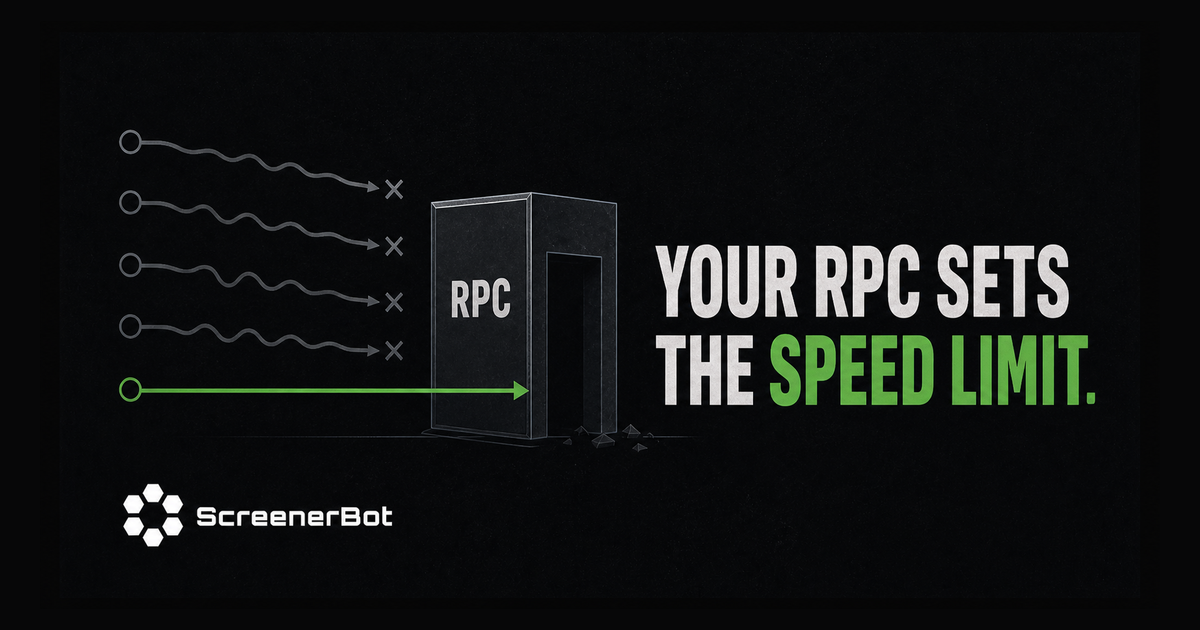
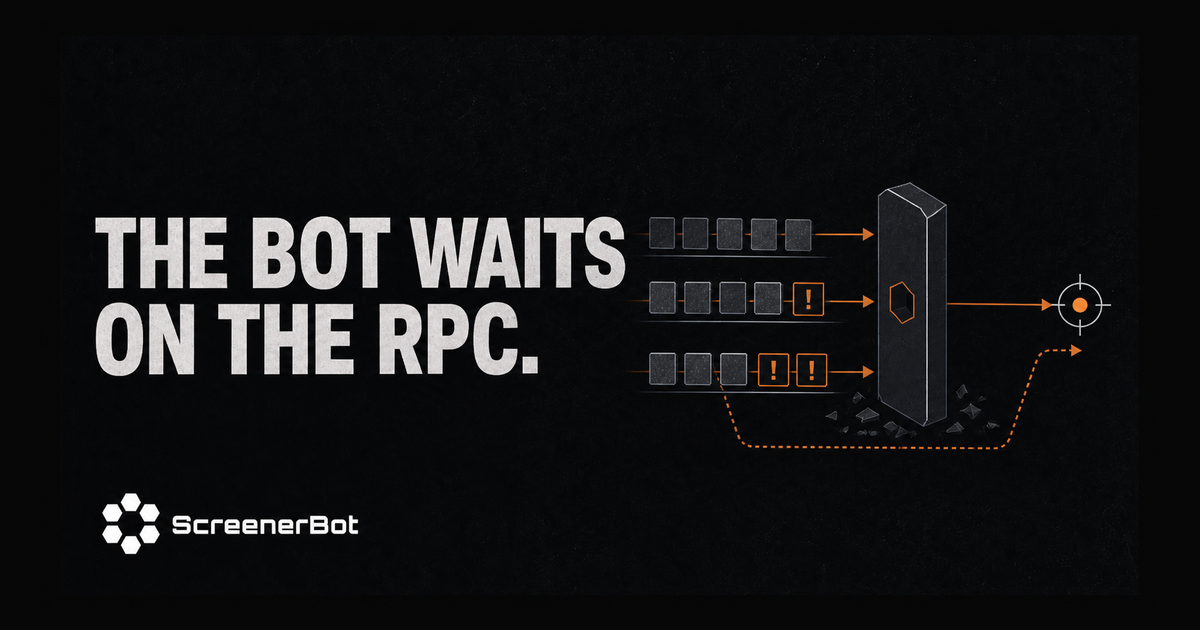
Every RPC provider enforces rate limits-the maximum requests per second (RPS) your bot can make. Exceed this, and you get HTTP 429 errors. Your bot stalls. Opportunities evaporate.
Typical rate limit tiers:
- Free: 10-25 RPS (unusable for serious trading)
- Starter: 50-100 RPS ($50-$100/month)
- Pro: 200-500 RPS ($200-$500/month)
- Enterprise: 1,000+ RPS (custom pricing)
💡 Real-World Rate Limit Math
Consider a bot monitoring 10 tokens with 3 liquidity pools each:
- Pool state checks: 30 pools × 1 request/second = 30 RPS
- Wallet balance monitoring: 10 tokens × 0.5 requests/second = 5 RPS
- Transaction confirmations: 5 RPS
- Price feed subscriptions: 10 RPS (WebSocket counts too)
- Historical data queries: 5 RPS
Total: 55 RPS minimum-before any burst activity. During volatility, when opportunities spike and you're checking faster, you can easily hit 100+ RPS. A free tier provider throttles you into irrelevance.
🛡️ Strategies to Manage Rate Limits
Caching: Store pool states locally, only refresh on-chain events. Reduces redundant queries.
Batching: Use getMultipleAccounts to fetch 100 accounts in one request instead of 100 separate calls. Reduces RPS by 100x for bulk operations.
WebSocket subscriptions: Get real-time updates pushed to you instead of polling. One connection handles unlimited updates.
Tiered plans: Upgrade strategically. If your bot generates $5,000/month profit, paying $500/month for unlimited RPS is obvious.
Multi-provider rotation: Spread requests across 2-3 providers. Doubles your effective rate limit, adds failover protection.
Reliability and Failover
🔧 When RPC Providers Go Down
Solana itself has been remarkably stable recently-as of November 2024, the network maintained a 2-month streak without major outages. But RPC providers are separate infrastructure with their own failure modes:
- Cloud provider outages: AWS, Cloudflare, or GCP incidents take down RPC endpoints
- API rate limit throttling: Provider-side congestion can temporarily block all customers
- DDoS attacks: RPC endpoints are public targets, especially during market hype
- Maintenance windows: Scheduled upgrades can last minutes to hours
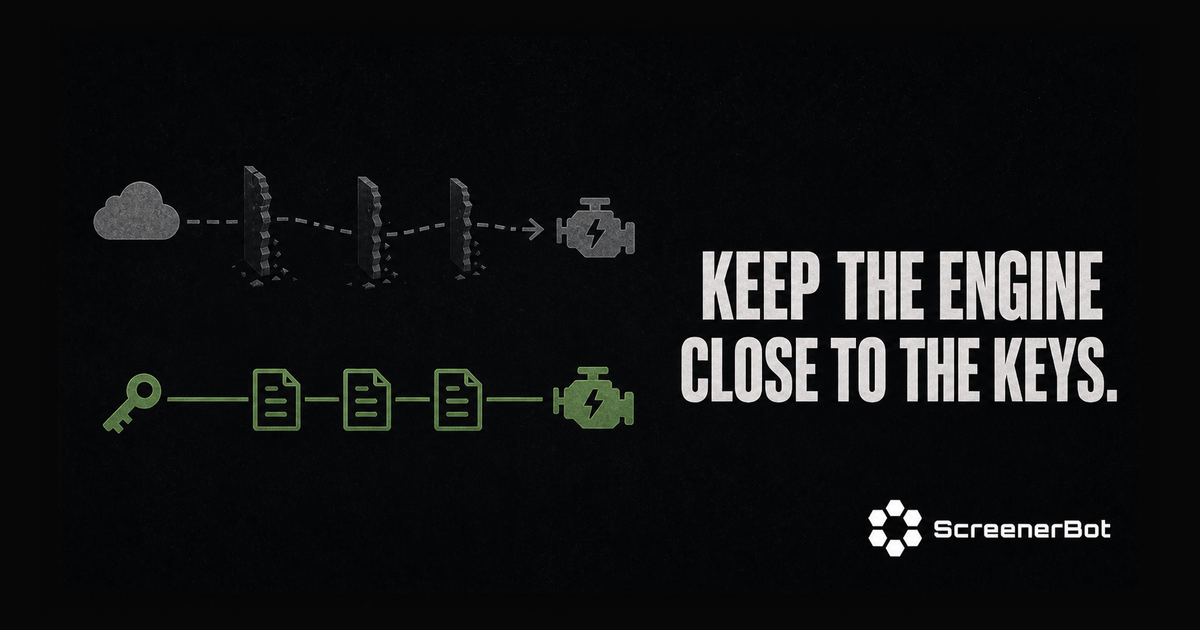
A single RPC provider gives you a single point of failure. When it goes down, your bot stops trading. If that happens during a flash crash or pump, you can't exit positions or capitalize on opportunities.
🛡️ Multi-Provider Failover Architecture
Professional trading infrastructure uses at least two RPC providers:
- Primary provider: Your fastest/most reliable choice (e.g., QuickNode)
- Secondary provider: Fallback when primary fails (e.g., Helius)
- Tertiary (optional): Public endpoint as last resort
Implement health checks that detect failures:
- Latency monitoring: If response time spikes >500ms, switch providers
- Error rate tracking: 3 consecutive 5xx errors trigger failover
- Slot lag detection: If provider falls >5 blocks behind, switch
- WebSocket disconnection: Auto-reconnect to backup on dropped connections
Good trading software abstracts RPC calls behind a manager that automatically fails over. You never manually intervene-the system handles it.
📊 Why 99.99% Uptime Matters
99.9% uptime sounds great: "Only 8 hours downtime per year!" But in trading:
- Markets don't pause for your maintenance window
- High-volatility events (where profits concentrate) don't wait
- You can't control when those 8 hours occur
99.99% uptime (52 minutes/year downtime) with failover means you're essentially always online. That's the reliability standard serious traders demand.
Advanced RPC Features
🚀 Beyond Basic Read/Write
Premium RPC providers offer features that give competitive advantages:
Staked Weighted Quality of Service (SWQoS)
Pioneered by Helius, SWQoS lets you stake SOL to guarantee dedicated bandwidth. During network congestion when public endpoints crawl, staked connections maintain low latency. Think of it as paying for a fast lane-critical for strategies that must execute even during chaos.
Priority Fee APIs
Solana uses priority fees to order transactions within blocks. Too low, and your transaction sits unconfirmed. Too high, and you overpay. RPC providers like Helius and Triton offer APIs that estimate optimal priority fees in real-time based on current network demand. This saves substantial SOL over time while maintaining execution speed.
WebSocket Account Subscriptions
Instead of constantly polling for account updates, subscribe to specific addresses. The RPC pushes updates instantly when changes occur. Essential for monitoring wallet balances or liquidity pool states without burning through rate limits.
gRPC Streaming
Binary protocol with lower overhead than JSON-based WebSocket. Triton's gRPC endpoints deliver updates in 10-50ms-significantly faster than traditional WebSocket streams. For MEV bots racing to capture arbitrage, this latency reduction is the difference between profit and missing the trade.
Digital Asset Standard (DAS) API
Helius's DAS API provides unified access to token metadata, NFT data, and compression trees without juggling multiple data sources. For bots that trade diverse assets, DAS simplifies integration and reduces the number of separate API calls needed.
Choosing Your RPC Provider
🎯 Decision Framework by Trading Strategy
Speed-Critical Trading (Arbitrage, MEV, HFT)
→ QuickNode (49.9ms latency) or Triton (gRPC streaming)
→ Budget: $200-$500/month for pro tier
→ Must-have: Sub-100ms P95 latency, WebSocket, high RPS limit
Solana-Native Focused (DeFi, Token Trading)
→ Helius (DAS API, SWQoS, priority fee tools)
→ Budget: $100-$300/month
→ Must-have: Solana-specific features, reliable WebSocket, good documentation
Cost-Effective Reliability (Swing Trading, Moderate Frequency)
→ Chainstack or Alchemy free/starter tiers
→ Budget: $0-$100/month
→ Must-have: Adequate RPS (50+), uptime SLA, simple pricing
Multi-Chain Operations (Cross-Platform Strategies)
→ Alchemy or QuickNode (both support multiple networks)
→ Budget: $200+/month for unified access
→ Must-have: Single provider for Solana, Ethereum, Polygon, etc.
Always Implement Failover
→ Use 2 providers minimum with automatic switching
→ Primary (fast/premium) + Secondary (reliable/cheaper)
→ Never rely on a single endpoint for production trading
💰 Cost-Benefit Analysis
Don't optimize for cheapest RPC-optimize for cost per profitable trade:
- If your strategy generates $10K/month, spending $500/month (5%) on premium RPC is negligible
- If slower RPC causes you to miss 5% of opportunities, premium RPC pays for itself
- Free tiers save $100/month but cost thousands in missed trades and rate limit downtime
Calculate: (Profit per trade) × (Trades missed due to slow RPC) vs (Monthly RPC cost)
For most serious traders, premium RPC is the easiest performance gain you can buy.
💡 Real-World Impact
When Infrastructure Determines Outcomes
MEV Bot Profitability: Arbitrage bots competing for the same opportunities need sub-100ms latency to be first in the transaction queue. A 200ms slower RPC means you're consistently beaten by faster competitors-turning profitable strategies into break-even operations.
Flash Crash Execution: When markets crash, everyone rushes to exit. Your RPC's rate limits and reliability determine whether you close positions at -20% loss or watch helplessly as limits plummet to -60% while your requests get 429 errors.
Arbitrage Window Duration: Cross-DEX arbitrage opportunities on Solana last an average of 2-5 seconds before other bots equalize prices. If your RPC adds 300ms to detection and 300ms to execution, you've consumed 12-30% of the opportunity window. Faster RPC = higher success rate.
Volatility Spike Failures: Rate limits become deadly during volatility. Your bot suddenly needs to check prices 10× faster, submit hedging trades, and monitor confirmations-all simultaneously. A 50 RPS limit means dropped requests and partial strategy execution. Premium tiers with 500+ RPS handle spikes gracefully.
Failover Prevents Catastrophe: When AWS experienced a regional outage in March 2025, RPC providers hosted in us-east-1 went dark for 3 hours. Bots with failover switched providers in seconds. Bots without failover sat idle-missing the entire market session.
🎓 Key Takeaways
- Latency compounds: RPC delays stack across data retrieval, submission, and confirmation-choose providers with <100ms P95 latency for competitive strategies
- Rate limits are real: Free tiers (10-25 RPS) can't support serious trading; plan for 100+ RPS to handle volatility spikes
- Reliability requires redundancy: Multi-provider failover is mandatory-single endpoints create unacceptable downtime risk
- Advanced features matter: SWQoS, priority fee APIs, and gRPC streaming separate professional infrastructure from basic setups
- Match provider to strategy: Arbitrage needs raw speed (QuickNode/Triton), DeFi needs Solana features (Helius), cost-conscious strategies can use mid-tier options
- Test before committing: Benchmark providers with your actual workload patterns-synthetic benchmarks don't capture real trading scenarios
- Monitor continuously: Latency, slot lag, and error rates change over time-automated health checks prevent degradation from killing performance
Conclusion
Your RPC provider is the foundation of your trading infrastructure. It's the invisible layer that determines whether your brilliant strategy executes flawlessly or dies to latency, rate limits, and downtime.
Choosing an RPC isn't about finding the cheapest option-it's about matching infrastructure capabilities to your trading requirements. Speed-critical strategies demand premium latency. High-frequency operations need substantial rate limits. Production systems require failover and uptime guarantees.
The good news? Modern trading platforms abstract RPC complexity. ScreenerBot, for example, supports multiple RPC providers with automatic failover, letting you configure primary/secondary endpoints and monitor health in real-time. The hard infrastructure work is handled so you can focus on strategy. For ScreenerBot users, we recommend Helius as the primary provider - it's the most compatible and thoroughly tested with ScreenerBot's architecture, offering Solana-native features like staked connections and DAS API that enhance trading performance.
But whether you're building from scratch or using existing platforms, the principle remains: infrastructure determines what's possible. Fast RPC enables strategies that slow RPC makes impossible. Reliable RPC means you're always in the market. Rate limits that match your needs prevent throttling during critical moments.
Test providers with your actual workload. Monitor their performance continuously. Build failover before you need it. And never treat RPC selection as an afterthought-it's as fundamental to trading success as your algorithm itself.
Choose infrastructure that matches your trading ambitions. Your profit margin depends on it.